Airfare Pain Point: Why IndiGo’s October 6 Fuel Surcharge Marks the End of Cheap Indian Flying
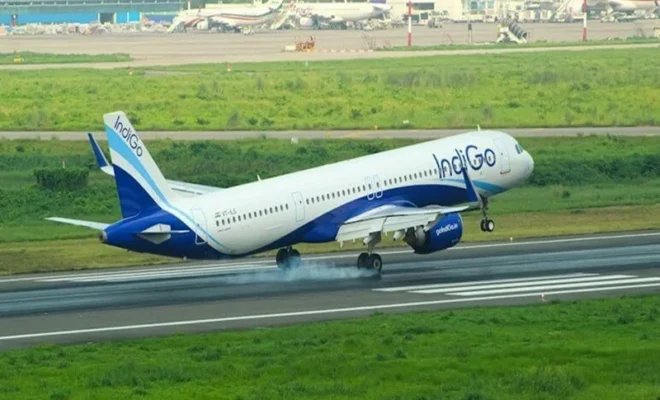
The last two decades of the aviation history in India have revolved around one simple but profound promise – flying has ceased to become a luxury. The emergence of low cost carriers with IndiGo at the forefront has made flying affordable for students, first time flyers, small businesses, and middle class families alike.
That promise is slowly being tested.
The move by IndiGo to hike its fuel surcharge for both domestic and international flights starting from October 6 looks like any other move in price. In actuality, this move is much more significant. It marks a point in time when the era of dirt cheap flying in India is slowly reaching its end. The airline has justified this move citing increased ATF prices, which have risen by more than 14% month-on-month, to levels higher than in many years in the past decade. The surcharge will be applicable for all fresh bookings starting from October 6 onwards.
This is not just about the passenger paying a few hundred rupees more.
Fuel Is No Longer Just Another Cost
For airlines, fuel is one of the biggest costs incurred, which constitutes 35% to 45% of their expenditure. An increase in global crude prices or political issues in supply chain affects the cost of aviation turbine fuel.
According to IndiGo, the new fuel surcharge is an immediate effect of the persistent increase in the price of ATF. The airline claims that due to fuel inflation, the economics of operation have changed.
Unlike seasonally adjusted fare hikes, fuel surcharges have a different logic. It accepts the fact that the cost of flying is higher.
The Hidden End of the Low-Cost Airline Model
India’s low-cost airways boom worked due to efficiency. High airplane utilization, fast turn-around time, high-density seating, and low pricing ensured that the market was one where flights were not much more expensive than premium rail travel.
But all of that rests upon predictable operating costs.
In today’s world, the aviation industry is subject to pressure on multiple fronts increased cost of jet fuel, higher rentals for the leased airplanes, depreciation of the rupee against the US dollar, logistic issues, maintenance costs, and capacity constraints. All of which put pressure on airline bottom lines.
And when all of these start increasing at once, then there is little choice left for airlines but to transfer some of that to customers.
Thus, the October 6 charge is about an industry recognizing the fact that increasingly cheap fares will become difficult to maintain.
The Consumer Feels Every Rupee
The time could not be more critical.
This additional charge will be implemented at a time when India is just starting its travel period, with increased demand due to Dussehra, Diwali, weddings, family gatherings, and year-end celebrations. The combination of increased fuel prices and high demand during the season may result in many paying much more than anticipated.
This means that, for a family of four people, an extra few hundred rupees on each ticket might lead to higher travel expenses.
Economically-minded travelers who chose flying as an alternative to long train travel will now start thinking about their decisions.
Dynamic Pricing Is Becoming More Expensive
While many tourists attribute such volatile prices to the airlines, the situation is actually much more complicated.
The airlines have always employed dynamic pricing strategies, changing their prices depending on demand, bookings and availability of seats. The fuel surcharge is just another element layered on top of existing variations.
In essence, what travelers are seeing is not demand-driven pricing anymore. They are paying for energy market instability as well.
As a result, there may be even more disparity between announced prices and total ticket cost.
Will Other Airlines Follow?
Based on history, chances are that they will. As fuel costs increase within the industry, rival airlines have no choice but to be faced with the same problems. Even though there may be different pricing strategies, rising costs of ATF do not apply to one airline alone.
With high fuel costs prevailing, today’s IndiGo move can very well become tomorrow’s industry trend.
This makes it even more relevant.
Flying Will Still Grow – But It Won’t Stay Cheap
None of this implies that India’s aviation explosion has run its course.
Demand for flights has never been higher, airports are still growing, and connectivity is being improved. The next decade is expected to see India become one of the world’s fastest-growing aviation markets.
However, growth and cheapness don’t always go together.
The next round in Indian aviation may be less about low fares and more about finding an equilibrium between profits and customer demand. Airlines who battled each other for years mainly on price may now battle on other fronts.
A New Reality for Travellers
But the passengers themselves have to reconsider their travel planning as well.
More advanced booking, staying clear from the holiday peak periods, being more flexible with travel timing, and considering all costs associated with tickets, including those imposed, will become essential in the future.
The era of last minute discount flights could be over for the airlines struggling with their costs.
Epilogue
The recent fuel surcharge imposed by IndiGo on October 6 cannot just be seen as an announcement by yet another airline company.
This represents certain economic trends that have affected the aviation sector in India – uncertain fuel prices, uncertain geopolitics, increasing operational costs, and economics of airlines.
Aviation was once made affordable for Indians and that trend may not change. However, the belief that the cost of air travel will continually decrease may no longer hold.
The skies are still open, but the price of reaching them has started becoming more complicated.
What’s Happening in India’s Airline Industry?
Why Was the IndiGo Flight Diverted?
Check out what happened after the pilot fell ill mid-air.
What Are India’s Baggage Rules?
Find the latest 2026 luggage limits for major Indian airlines.
Why Did IndiGo Make Emergency Landing?
Uncover what happened during the unexpected landing at IGI Airport.
Can IndiGo’s Share Rally Continue?
Track down the factors behind IndiGo’s latest share-price surge.
Will New Airlines Challenge IndiGo?
Explore how two new airlines could reshape competition in India.