
Air Pollution in Indian Cities: Causes and Long-Term Solutions
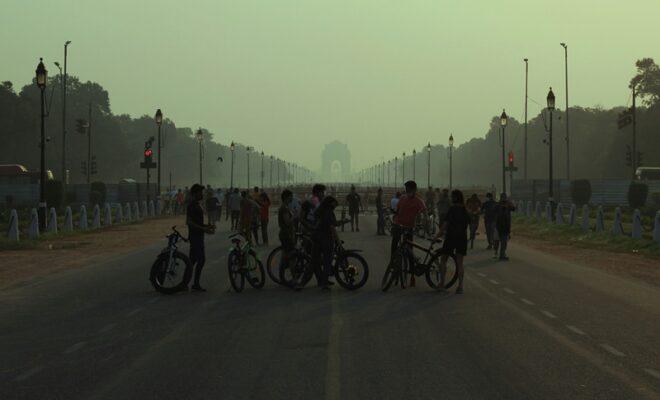
Air pollution in Indian cities is also a major public health issue that persists through 2026. PM2.5 has been found to be many times higher than the WHO standards. Presently, Byrnihat has been identified as the most polluted city in India with a level of 100 µg/m³, followed by Delhi and Ghaziabad. Almost 44% of notifiable towns experience non-attainment.
This is a perennial problem that is a result of rapid urbanisation and industrialisation, as well as seasonal changes and contributes to millions of premature deaths every year. How to clean Indian cities from the problem of air pollution?
Primary Causes of Air Pollution
Vehicles, particularly in urban conditions, continue to emit a substantial amount of pollutants. Industries such as thermal power stations and brick kilns are major sources of PM, SO2, and NOx.
Sources of Organic Compounds:
Burning of crop residue in the northern states increases the intensity of winter smog, whereas the burning of biomass/solid fuel for cooking contributes significantly, especially along rural-urban fringes.
Construction and Dust
Unpaved roads, construction sites, and windblown dust raise the level of PM throughout the year. Statistics show that more than 190 cities are above the limit for PM10, the pollution being due to structural sources rather than incidental events.
For more on health effects, see our in-depth topic page on respiratory diseases caused by urban air quality in India.
Long-Term Solutions and Government Initiatives
The NCAP, launched in 2019, targets a 40% reduction in particulate matter by 2026 over 2017 baselines in 131 non-attainment cities. The progress is uneven: monitoring stations have expanded, but barely a fraction of the chronically polluted cities are covered, and most of them still exceed the standards.
The key strategies include the imposition of stricter emission norms, such as BS-VI fuels; electric vehicles; enhanced public transport, and regional airshed management for transboundary pollution.
Other initiatives include subsidies on clean fuel for cooking, waste management, and green infrastructure such as the greening of urban forests.
Air Pollution Snapshot in Indian Cities
| Cause | Contribution Example | Affected Regions | Mitigation Under NCAP |
| Vehicular Emissions | 27-50% of PM2.5 in urban areas | Delhi, Mumbai, Bengaluru | EV promotion, public transport |
| Industrial/Power Plants | Major SO2 and PM source | Northern plains, industrial belts | Stricter norms, FGD installation |
| Crop Residue Burning | Seasonal spikes in winter | Punjab, Haryana, UP | Alternatives to burning |
| Household Biomass | Dominant in rural/peri-urban | Nationwide, especially north | LPG subsidies, clean fuels |
| Construction/Dust | Year-round elevation | All major cities | Dust control, road paving |
Conclusion
Tackling air pollution in Indian cities requires faster implementation of NCAP, its extension to more cities, and intersectoral coordination. Monitoring and some reductions are encouraging, but long-term structural transformation in the energy, transport, and agriculture sectors will be essential if targets for 2026 are to be reached and people’s health protected over the longer term.
FAQs
What is the root of air pollution in Indian cities?
The main sources of pollution are vehicular emissions, industrial outputs, crop burning, household biomass cooking, and construction dust, often worsened by winter inversions.
How is NCAP faring in 2026?
NCAP targets a 40% reduction in PM by the year 2026. Monitoring has improved, but coverage is still limited to about 4% of chronically polluted cities, with uneven reductions.
Which Indian cities are the worst emitters of air pollution in 2026?
Byrnihat tops with very high PM2.5, followed by Delhi and Ghaziabad, while several northern cities are chronically exceeding the standards.
What does the future hold in regard to long-term solutions for air pollution in India?
The solution points for all these lie in shifting to clean fuel, electric mobility, stricter industrial norms, regional airshed plans, and green urban infrastructure.