
Top 5 Aircraft Carriers: Features, Size, and Capabilities
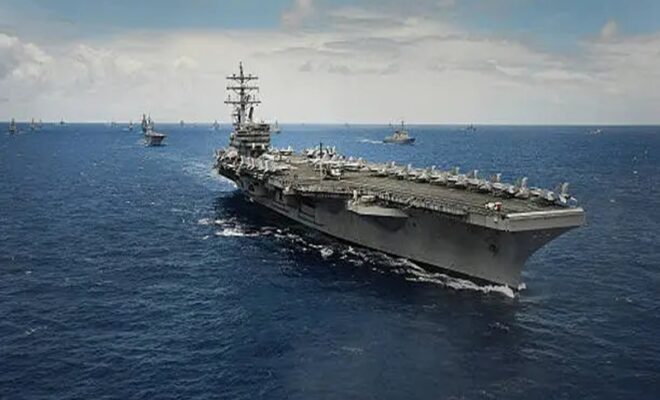
Naval forces are safeguarding the countries in the ocean. The highly-equipped naval power encompasses aircraft carriers. They not only ensure safety but give an upper edge in the defence ecosystem. Top Aircraft carriers represent the backbone of modern naval power, allowing countries to project military strength far beyond their shores.
The top aircraft carriers in the world combine advanced technology, massive size, and strategic capabilities, making them critical assets in global defence systems. These floating airbases can deploy fighter jets, helicopters, and surveillance aircraft, enabling rapid response across oceans.
Here is the Navy Aircraft Carriers List:
- USS Gerald R. Ford (USA)
The USS Gerald R. Ford is currently the most advanced aircraft carrier in the world. It introduces cutting-edge technologies like the Electromagnetic Aircraft Launch System (EMALS), replacing traditional steam catapults.
With a displacement of over 100,000 tons, it can carry more than 75 aircraft and operate efficiently with reduced crew requirements.
- INS Vikramaditya (India)
The INS Vikramaditya plays a crucial role in India’s maritime strategy. It operates MiG-29K fighter jets and uses a ski-jump launch system. With a displacement of around 45,000 tons, it strengthens India’s presence in the Indian Ocean region.
- HMS Queen Elizabeth (UK)
The HMS Queen Elizabeth is the largest warship ever built for the UK. It is designed to operate F-35B stealth fighter jets. With advanced radar systems and a displacement of around 65,000 tons, it represents modern British naval capability.
- Liaoning (China)
The Liaoning is China’s first operational aircraft carrier and a key part of its expanding naval power. Although smaller and based on older Soviet design, it serves as a training and operational platform for China’s naval aviation.
- Charles de Gaulle (France)
The Charles de Gaulle is the only nuclear-powered aircraft carrier outside the United States. It carries Rafale fighter jets and plays a key role in European defence operations, offering high endurance and global reach.
Key Features of Modern Aircraft Carriers
The Aircraft Carrier Features that define modern naval power include advanced launch systems, large flight decks, and integrated defence systems. These carriers are equipped with radar, missile defence, and electronic warfare capabilities, making them highly sophisticated military platforms.
Oceanic horizons feel secure and stringent with the world-class naval power. It not only strengthens the borders in the ocean but also brings credibility and viability to sail across the globe.
Size and Capability Comparison
The Aircraft Carrier Size Comparison shows significant variation:
- US carriers exceed 100,000 tons
- UK and Chinese carriers range between 60,000 and 70,000 tons
- Indian and French carriers are smaller but strategically important
Despite differences in size, all carriers serve as mobile airbases capable of conducting complex military operations.
Why Aircraft Carriers Matter
The modern aircraft carrier capabilities go beyond warfare. They are used for:
- Humanitarian missions
- Disaster relief operations
- Strategic deterrence
Their presence alone can influence geopolitical situations.
Conclusion
The top aircraft carriers in the world showcase the evolution of naval warfare and technology. From the advanced USS Gerald R. Ford to India’s INS Vikramaditya, each carrier reflects the strategic priorities of its nation.
These vessels continue to play a crucial role in maintaining global security and power balance.
Read Also: New Flight Ticket Cancellation Rules Effective Today: What Changes for Passengers
FAQs
1. Which is the largest aircraft carrier in the world?
USS Gerald R. Ford is currently the largest.
2. Does India have aircraft carriers?
Yes, including INS Vikramaditya.
3. What is the role of aircraft carriers?
They serve as mobile airbases for military operations.
4. Which countries have nuclear-powered carriers?
The US and France.