
Is IndiGo Too Dominant? Indian Aviation Faces a Reality Check After Massive Disruptions
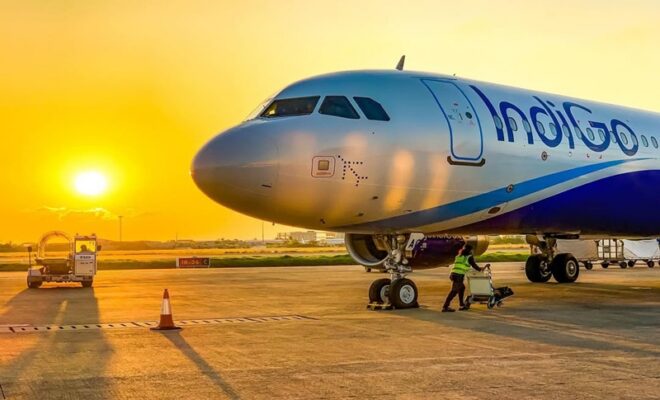
The Indian aviation industry was on a pinnacle when the IndiGo crisis caused an unseen challenge that left thousands of passengers stranded in the various international airports. What used to be the epitome of low fare flights and time management is now questioned because of highlighting the structural weaknesses in Indian aviation. The recent episode, where IndiGo Flights Cancellation Disrupts Travel, further exposed these vulnerabilities, especially as IndiGo had a domestic market share of more than 65%; hence, its operational inconveniences due to the lack of pilots were disastrous enough to cast doubt on the issue of excessive reliance on a single airline. With competition being low and the regulatory environment still being a challenge, there is a discussion on whether there is a need to reset the aviation growth model in India.
The Week That Shook Indian Aviation
IndiGo cancelled more than 2,000 flights in early December 2025, having not properly planned to adapt to new pilot fatigue management regulations. The pilot crisis that struck unexpectedly left tens of thousands of passengers grounded, weddings and holidays interrupted, and filled social media with photos of frustrated and trapped commuters and the heaps of luggage.
This was one of the worst operational breakdowns in the history of Indian aviation. Airports such as Delhi and Bengaluru were chaotic, and therefore aviation authorities had no option but to move with speed.
Government’s Emergency Intervention
In order to avoid causing more damage, the government provisionally loosened the pilot fatigue laws to enable airlines to normalize operations. Although this action provided instant relief, analysts indicated it demonstrated the instability of the system where one airline controls capacity.
IndiGo made numerous public apologies and affirmed that the amount of passengers refunded had already passed through over $68 million and it would continue increasing the losses.
A Market Dominated by Two Giants
IndiGo and the Tata-owned Air India Group own almost 92% of the Indian aviation industry – amounting to duopoly-like competition, with a country of Indian size. IndiGo has a near-monopoly in some of the regional flights.
According to aviation professionals, the situation of such concentration poses a significant systemic risk. When one of the airlines collapses so will the whole network and this is what happens to be the case in this crisis.
IndiGo’s Rise to the Top
IndiGo was founded in 2006 and its success was established on low fares, high utilization of its aircrafts, and punctuality in the industry. It has a fleet of well over 400 planes today, has a passenger flight of approximately 380,000 and a flight of more than 2,000 every day.
The airline recorded a revenue of $9 billion and a profit of 807 million last year under the leadership of CEO Pieter Elbers. However, even this financial might was not able to protect it against fragility in its operations.
Brand Damage and Industry Implications
The IndiGo reputation is pegged on reliability with the company recording a 91.4% on-time performance earlier this year. That number dropped to a pitiable 3.7% in one week, during the crisis, a drastic drop considering that the brand used to sell punctuality as its brand.
Indian aviation, now being cautioned by industry veterans, is dangerously overexposed by the uncontrolled dominance, excessive fuel taxes, slow supply chains and the recurring failures of competitors such as Jet airways and Go first.
Too Big to Fail?
The present IndiGo crisis has brought back a serious debate, whether India can afford to have one airline too big to fall? Though IndiGo will recover in terms of its operations, the long-term task will be to restore a customer base and make sure that the industry is not dependent on two airlines.