
India’s Household Gold Wealth Hits an Unprecedented Milestone
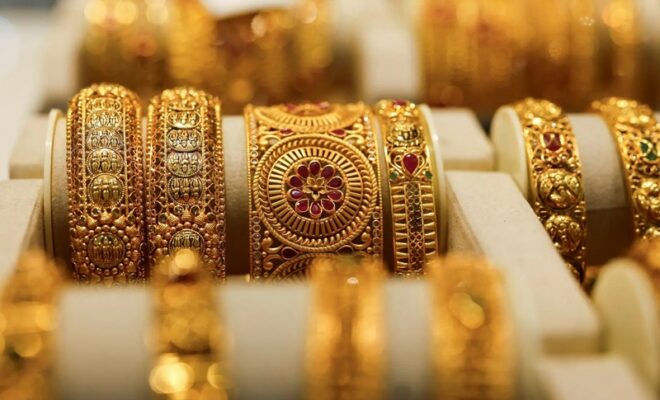
The Indian people have always been inspired by gold and this passion has attained an economic historic milestone. In today’s market prices, the collective net worth of the amount of gold possessed by households in India is estimated to be more than $5 trillion in gold at record high prices, a figure that can now match the GDP of the country. The cause of this rush is soaring world prices of gold and decades of consistent accumulation by families in both urban and rural India. Beyond being one of the cultural symbols, gold has become one of the biggest stores of personal wealth in the country, and it has changed the discussion of savings, investment behaviour, and economic policy.
How India’s Household Gold Reached Record Valuations
The Indian households are the largest private gold holders in the world. The families over the generations have hoarded the gold in jewellery, coins, and bars where they find it to be safer, and in most cases, they do not consider it to be a financial resource. As the world gold prices hit historic highs, the same amount of gold is now worth a lot more.
Consequently, this has seen the analysts project that India household gold stock-at current prices-has surpassed $5 trillion in gold at record high prices making it beat many leading economies around the world in the value of their household assets. This shift brings out the fact that national wealth indicators can be redefined by the movements of prices alone.
Why Gold Remains India’s Most Trusted Asset
Gold has a special place in Indian families. In addition to investment, it is prominent in weddings, festivals and in planning inheritance. In contrast to stocks or bonds, gold is seen as a tangible commodity which is immune to inflation and is universally accepted.
This confidence has meant stable demand even in times of economic insecurity. With the rise in prices, households that already had gold experienced a substantial increment in their net worth which strengthens the notion that gold is a sure long-term asset. This cultural belief is one of the key factors that make it possible to state that India household gold bigger than GDP ceases being merely a hypothetical concept, becoming a standard size.
Economic Implications of Household Gold Surpassing GDP
This is significant because India’s household gold is bigger than GDP. Although the value indicates wealth creation, the bulk of this gold is kept in lockers and homes and therefore it does not lead to productive economic activity. This is what is commonly referred to by economists as idle wealth.
Meanwhile, these enormous reserves serve as a financial cushion to the household particularly during times of crisis. Policymakers are still finding solutions to invest this wealth into the formal economy by gold monetisation programs, digital gold, and gold-backed financial instruments.
What Lies Ahead for India’s Gold Economy
With the international uncertainty prevailing and the gold prices still high, the household holdings may be further valued. The magnitude of the $5 trillion in gold at record high prices is a testimony to both an opportunity as well as a challenge; a mixture of traditional saving patterns with the new economic growth demands.
The gold narrative of India is not cultural anymore; but it is macroeconomic. With the increasing debate on the issue of financial inclusion and capital formation, the place of household gold is still going to take center stage in the Indian economic story.