
India’s Solar Surge Uncovers a Growing Waste Challenge
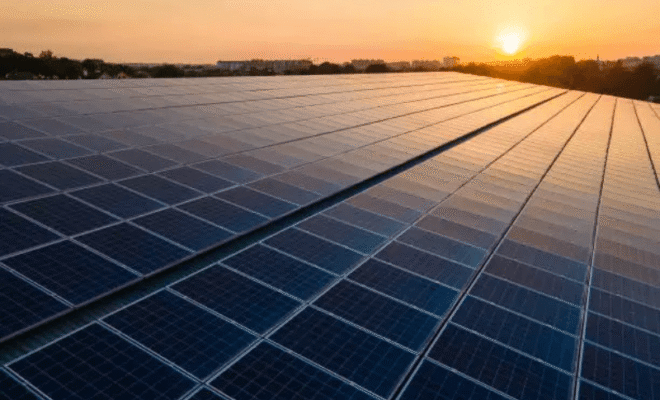
The renewable energy in India is currently gaining momentum at a very high rate whereby solar power has been at the center stage in lowering the levels of carbon emission as well as serving the increasing electric power. The push of clean energy has come to be characterized by immense solar parks and rooftop installations, a shift widely discussed in Latest News in India. But under this success there is another challenge that is not commonly spoken about. The India solar boom faces a hidden waste problem with the advent of ageing solar panels reaching end of life. Unless there is proper recycling, the dumped panels may pose serious environmental and economic hazards. It is crucial to tackle this solar boom in India with a latent waste issue earlier so that solar power can be completely sustainable in the long-run.
The Rising Scale of Solar Panel Waste
Solar panels have a life span of about 25 years, after which, their efficiency begins to decline and needs to be changed. The solar installations that were developed in India are approaching this stage now and this poses a question of the amount of waste that is going to come up shortly. Panels are mostly composed of glass, aluminium frames and silicon cells, yet they have some traces of the dangerous materials, too. When deposited in landfills or treated casually these materials may pollute soil and water.
It is estimated that solar panel waste India may become a million-tonne waste in the next twenty years. This is especially a challenge that is not taken into account in the hype of renewable energy targets. With the deployment increasing every year, the disparity between the deployment and waste planning grows, which further supports the argument that the India solar boom faces a hidden waste problem that should be addressed at once.
Gaps in Policy and Recycling Infrastructure
India has gone to the extent of categorizing solar panels as electronic waste under the electronic waste rules, and has made it the duty of the manufacturers to take care of the music of collection and recycling. Although this is a good step, the implementation is not balanced. Organised collection networks do not claim many solar panels, particularly rooftop systems, when they have ceased operation.
Recycling infrastructure is also small and highly concentrated in the re-processing of low value materials like glass and aluminium. There are few advanced solar waste recycling technologies that utilize high-value materials such as silver and purified silicon. Through this, precious resources are wasted away, and there are increased environmental risks. Enforcement and the investment in the modern recycling facilities are important to cope with this challenge.
Turning a Challenge into an Opportunity
Although the risks are there, solar waste is also one of the opportunities of India to create a circular economy. Solar waste recycling can be efficient and minimise the reliance on imported raw materials and decrease emissions related to mining and production. It would help to recover metals and reusable materials of old panels and help domestic industries and generate green jobs.
According to experts, it is possible to decrease the risk of waste in the future with the help of recycling cost considerations of the solar projects, promotion of take-back schemes, and increasing the level of awareness among the people. By taking action in time, India can make this one of its competitive advantages and it will demonstrate that responsible waste management and clean energy development can be mutually compatible.
Conclusion
The solar journey of India is one of the pillars of its climate policy yet success over the long term requires addressing the end-of-life challenges now. Considering and addressing solar waste, policymakers and industry leaders can make sure that clean energy will not generate new environmental issues. Solar power can be viewed as a sustainable solution to decades ahead but only proactive actions will help make it a reality.