
Australia and Japan Push Strategic Rare Earth Projects to Cut Reliance on China
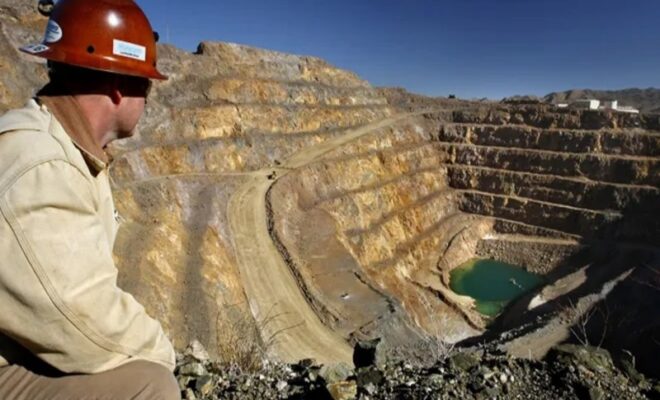
As demand for rare earth metals surges around the world and governments try to move their supply chains away from China’s dominance, Australia and Japan are speeding up significant rare earth projects. The newest initiatives are all about enhanced processing, new mining frontiers, and making sure that important minerals needed in renewable energy, defence, and high-tech industry are always available.
Australia Builds Processing Link for Rare Earths That Was Missing
Australia is moving beyond mining to improve its downstream capabilities. The Australian Nuclear Science and Technology Organisation (ANSTO) is building the country’s first common-use processing facility for clay-hosted rare earths in Sydney. The facility is set to open in 2026 and is meant to support other projects and lessen the need for refining in other countries.
Australian Rare Earths’ Koppamurra project in South Australia is one of the main beneficiaries. It is an ion-adsorption clay deposit that is comparable to those found in southern China. The project has a JORC-compliant resource of 81.4 million tonnes with 785 parts per million total rare earth oxides (TREO). Even if there are problems with getting to the land, the first production is planned for 2025–26.
Put your attention on Heavy Rare Earths and New Mining Hubs.
The Australian government has also made it a priority to look for heavy rare earth elements like dysprosium and terbium, which are very important for making high-performance magnets. A $3.4 billion exploration campaign has found high-potential locations in the basins of Western Australia and Northern Territory.
The Yangibana rare earths project in Western Australia is another important development. It aims to start production in 2026. Eneabba also has ambitions to expand, which will increase the output of neodymium-praseodymium oxide, which is utilized in electric vehicles and wind turbines.
Japan Looks to the Deep Sea for Rare Earth Security
Japan is taking a less common path by moving forward with deep-sea rare earth mining in its own economic zone. From January 11 to February 14, 2026, test activities will take place off the coast of Minamitori Island. This will be the first time in the world that rare earth-rich mud will be continuously extracted from the seabed at depths of about 6,000 meters.
If the initiative works, it might grow to full trials by early 2027, with predictions of recovering up to 350 tons of mud each day. The ¥40 billion project, which started in 2018, is meant to make Japan’s domestic supply stronger and less vulnerable to problems outside the country.
Summary
Australia’s processing push and Japan’s deep-sea ambitions reflect a broader strategic shift to secure rare earth supplies outside China. As demand accelerates, these projects could reshape global supply chains and strengthen resilience in critical industries worldwide.